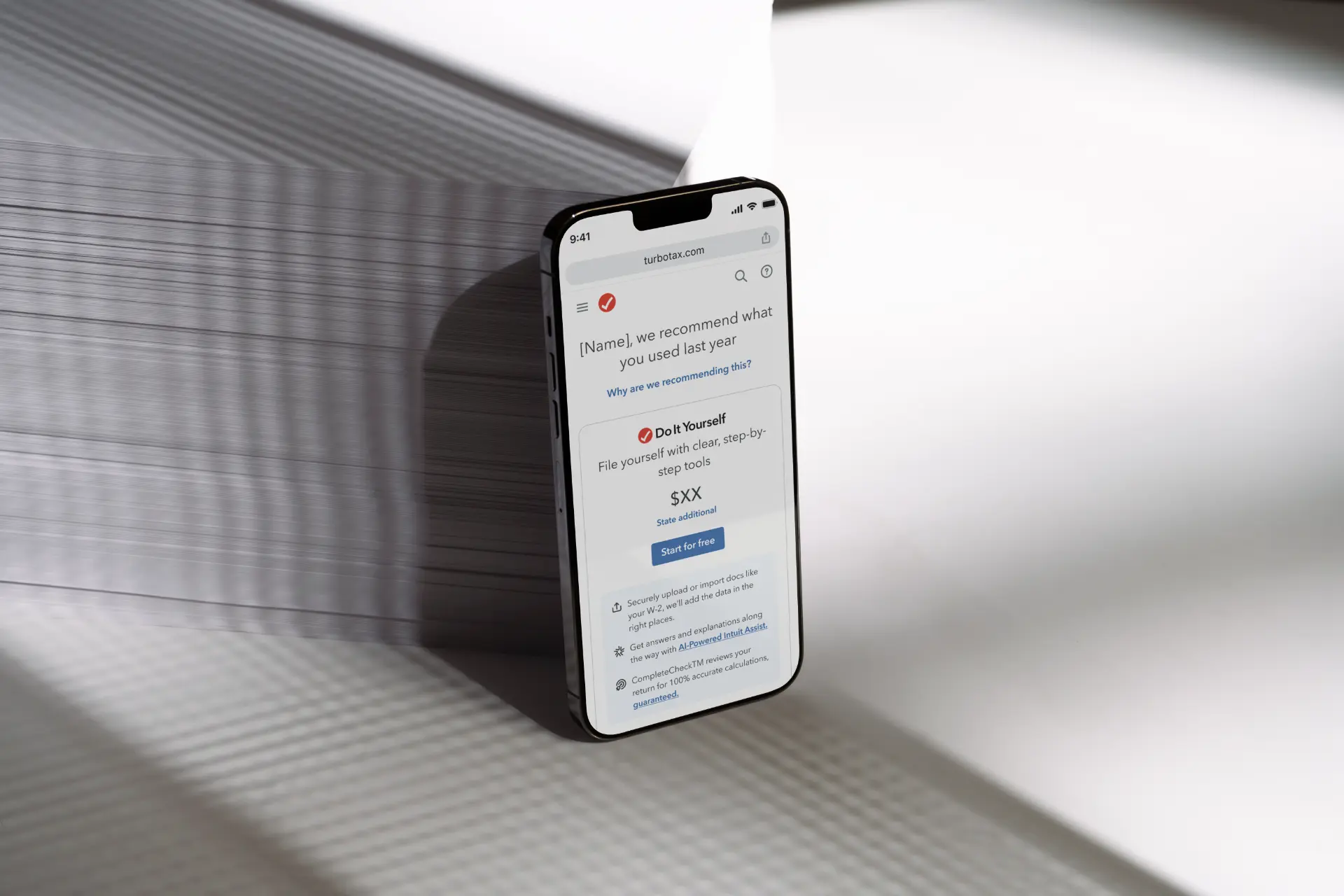
TurboTax
Onboarding
- Role
- Senior Product Designer
- In collaboration with
- PM, Engineering, Research, and Legal
- Year
- 2026
(01)Overview
An AI-driven redesign of onboarding for returning TurboTax customers.
Returning users already knew TurboTax, but their tax situation, confidence, and preferred level of help could change from year to year. The old experience didn’t account for that.
Machine learning models now personalize each returning customer’s product recommendation, interface, and incentives, so onboarding adapts to who they are this year rather than who they were last year.
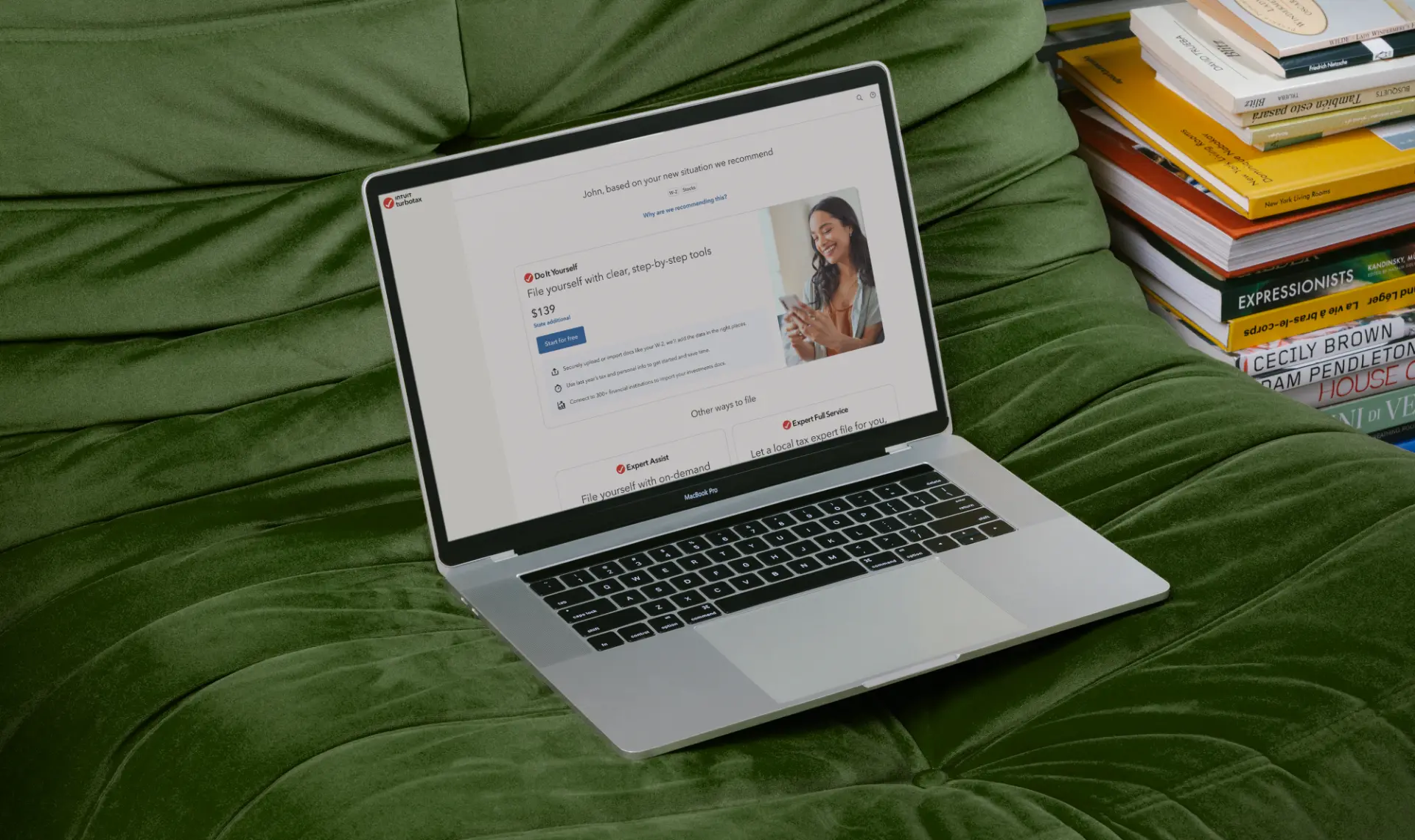
(02)Problem
TurboTax’s returning user onboarding treated all customers the same, pushing everyone through identical screens and static recommendations. This one-size-fits-all experience couldn’t adapt as customers’ needs changed. That lowered confidence in the recommendation and pushed some returning customers to leave.
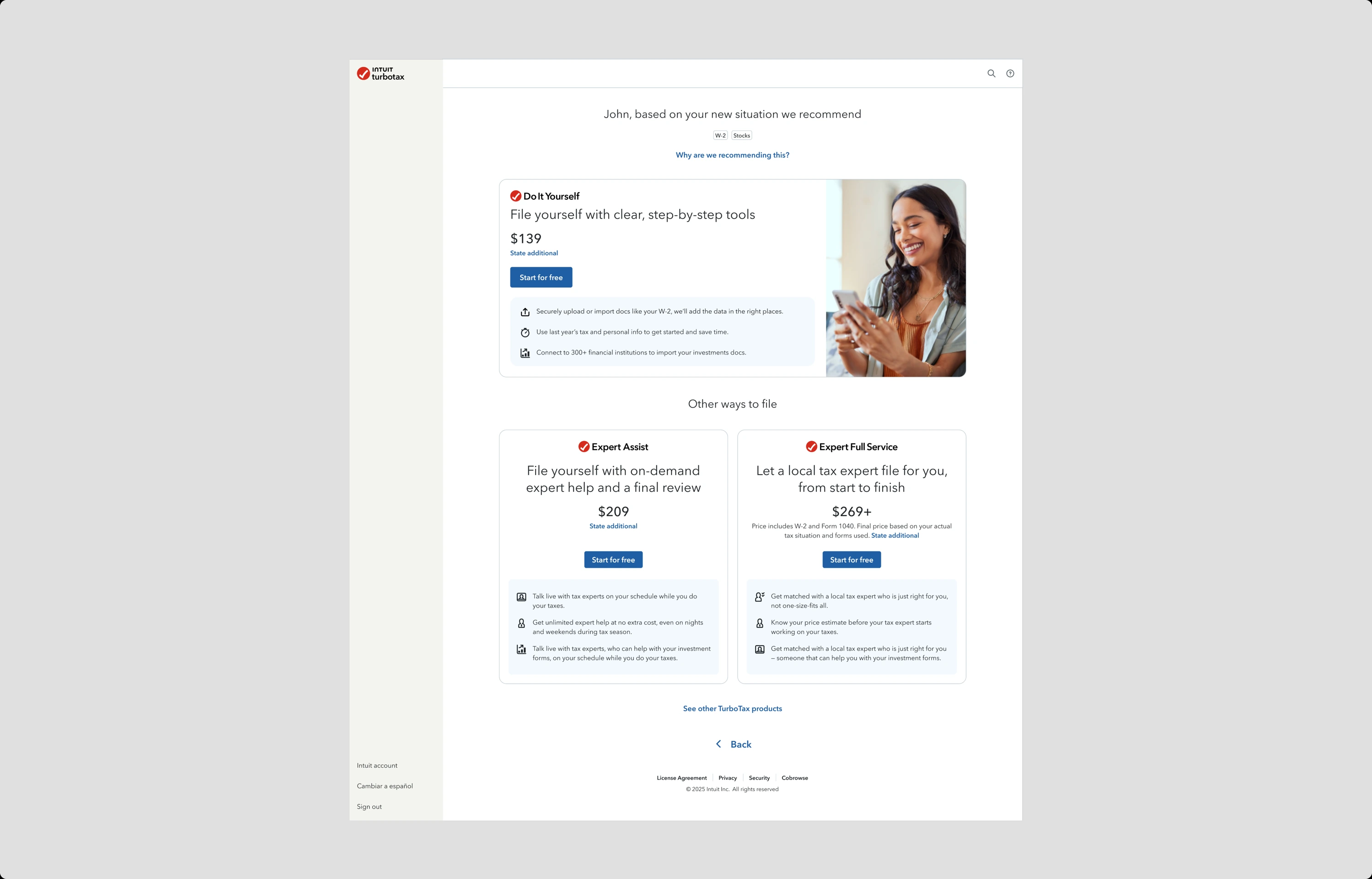
TO
→ Dynamically changing features, personalization, custom layouts, and a quicker path to change products.
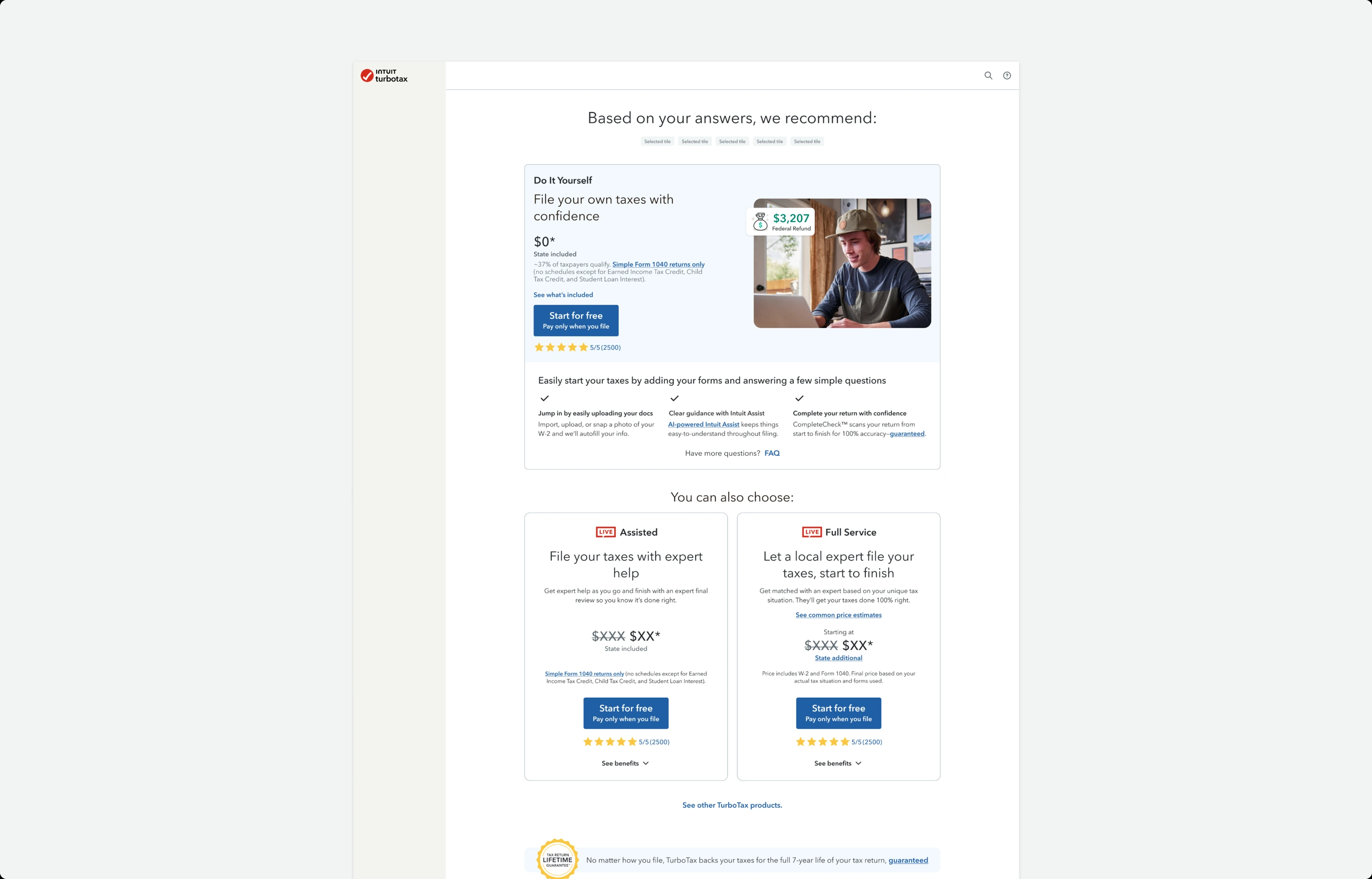
FROM
→ Static features, one-size-fits-all recommendations, a fixed layout, and a separate onboarding flow just to change products.
FROM
→ Static features, one-size-fits-all recommendations, a fixed layout, and a separate onboarding flow just to change products.
TO
→ Dynamically changing features, personalization, custom layouts, and a quicker path to change products.
(03)Design direction
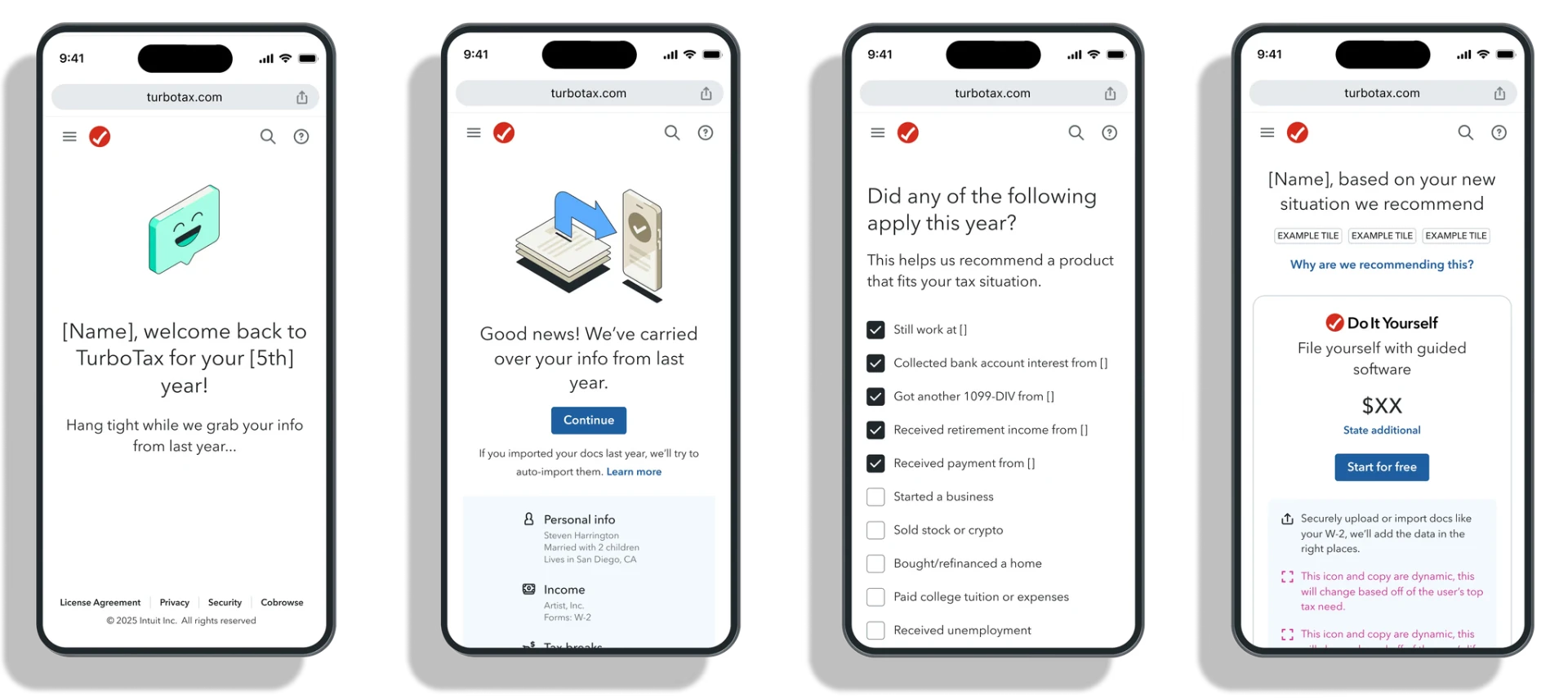
Move from a fixed product recommendation to an adaptive journey. Personalize the recommended product, supporting features, page layout, and incentives around the user’s needs, mindset, and seasonality.
The returning-user flow welcomes customers back, brings forward information from their previous return, checks what changed this year, and connects those answers to a recommendation. A clear explanation of why a product is recommended helps users understand the choice, while other filing options remain available.
Changing products should not require a separate onboarding journey. The redesigned experience brings that choice into the recommendation page, giving users a shorter path to the level of help they want.
(04)AI-assisted delivery
The onboarding experience was split across two tech stacks, and engineering’s long-term goal was to move every screen onto one. The question was how close we could get without redesigning anything.
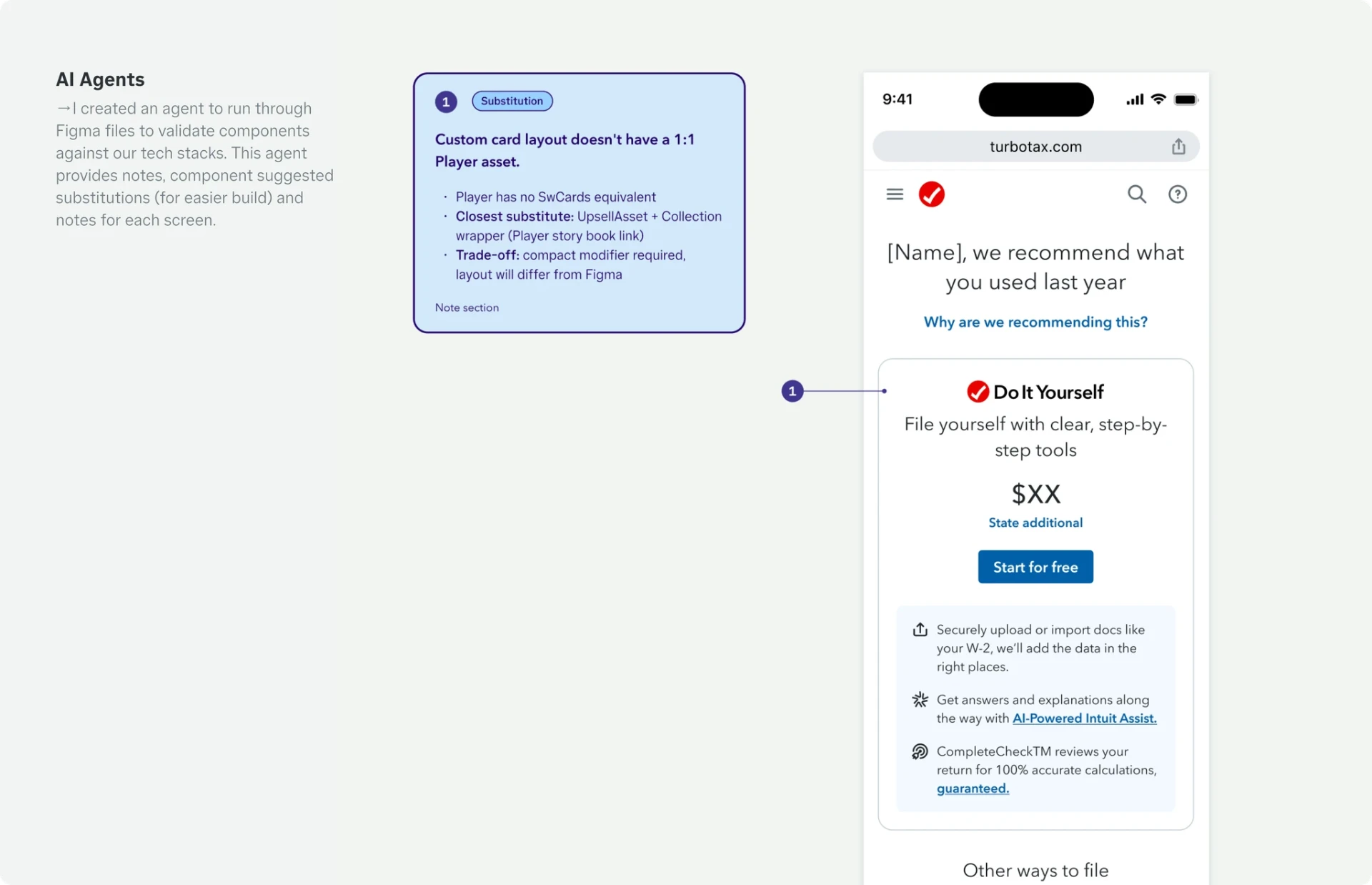
I built an AI agent to answer that question. It reviews the existing Figma designs against the target stack, screen by screen, and finds which components already have a direct match. Where there’s no equivalent, it suggests the closest available substitute and explains the trade-offs.
That turned the migration into a clear, shared assessment. Design and engineering could see which screens could move as they were, which needed small substitutions, and where real trade-offs had to be made, all without starting over.
(05)Data
A 46% lift in assisted starts (people who started in a product with expert help) drove +13.3% average revenue per customer (ARPC) and +11.6% revenue per auth (RPA).
Personalization changed what returning customers chose. The recommendation reflected what had changed in their year, surfaced features that matched their situation, and explained why we recommended the product. With that clarity, more customers chose to start with expert help.
We didn’t get there with one redesign. We tested 42 variations built from 17 distinct recipes, mixing product recommendations, feature sets, layouts, and incentives, to find which combinations worked best for which customers.
(06)Outcome
Returning customers no longer got a one-size-fits-all recommendation. The experience adapted to their year and let them change products without starting over. The result was a model for personalized onboarding that builds confidence and meets people where they are.